
Bank balance vs. available to spend: why they differ
The short answer
Your bank balance is everything in the account right now. What's available to spend is what's left after the money that's already spoken for: bills due before payday, charges still pending, and your everyday spending until then. The gap between the two is money you've effectively already spent.
Jordan's two numbers
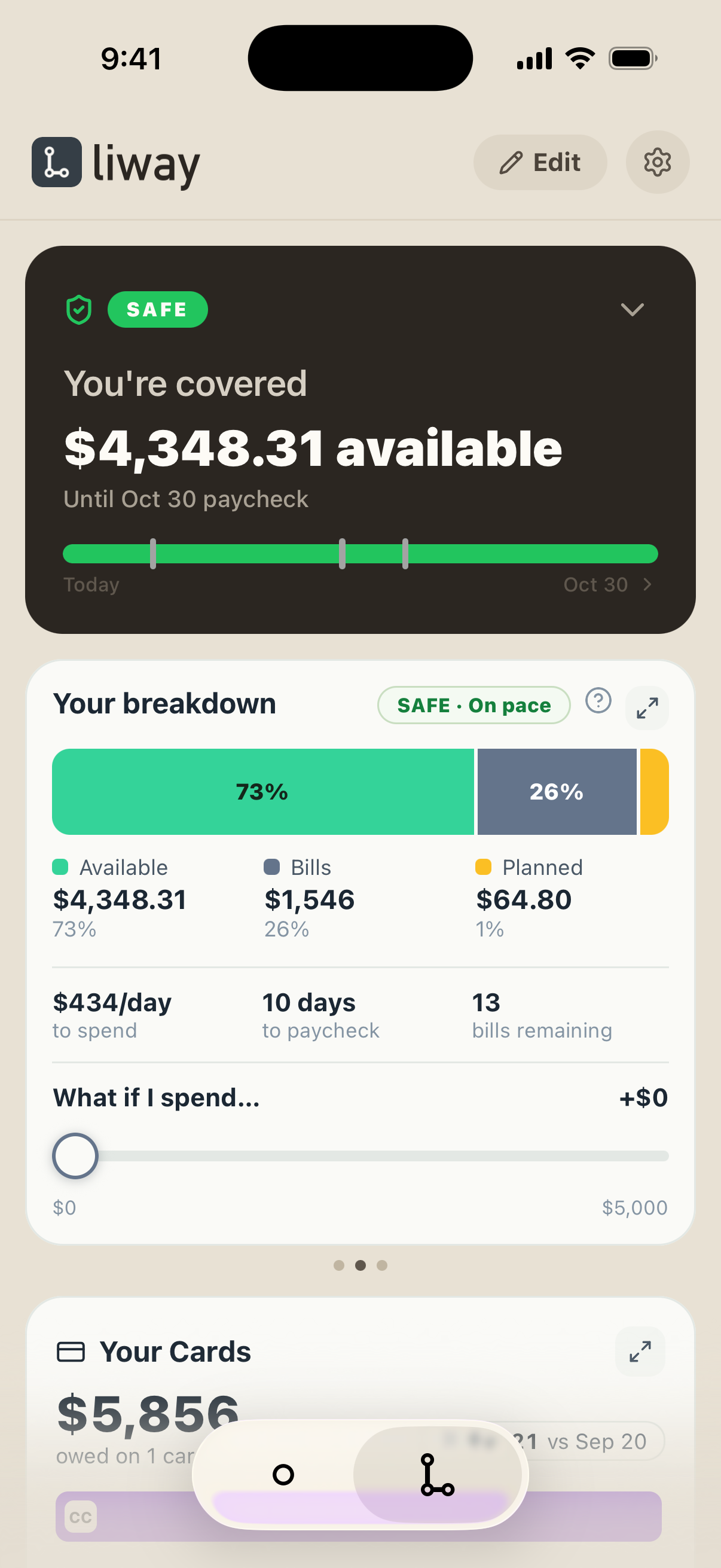
On October 20, Jordan's accounts held $5,959.11. That isn't what Jordan could spend. Here's the difference, from liway's own breakdown.
Jordan is illustrative; the numbers are built to be true to life, and they're the app's own. The $1,610.80 between the two numbers was already spoken for.
How to work it out yourself
- Start with the balance.The number your bank shows. It is real money, just not all of it is free.
- Take away what is pending.Card charges and holds that have not settled yet will still come out.
- Take away the bills due before payday.Autopays, rent, loans, subscriptions and the card payment due before your next paycheck.
- Take away your everyday spending until payday.Groceries, gas and the like, at your usual pace.
- What's left is available to spend.That's the number to decide with, not the balance.
Where it gets tricky
- Money moved to savings or a shared account is still yours. It is a move, not spending.
- Paying your credit card is not new spending: the purchases already were.
- Your credit limit is not money you have. Only the money in your accounts is.
- A paycheck counts once it lands, not before.
How liway does it
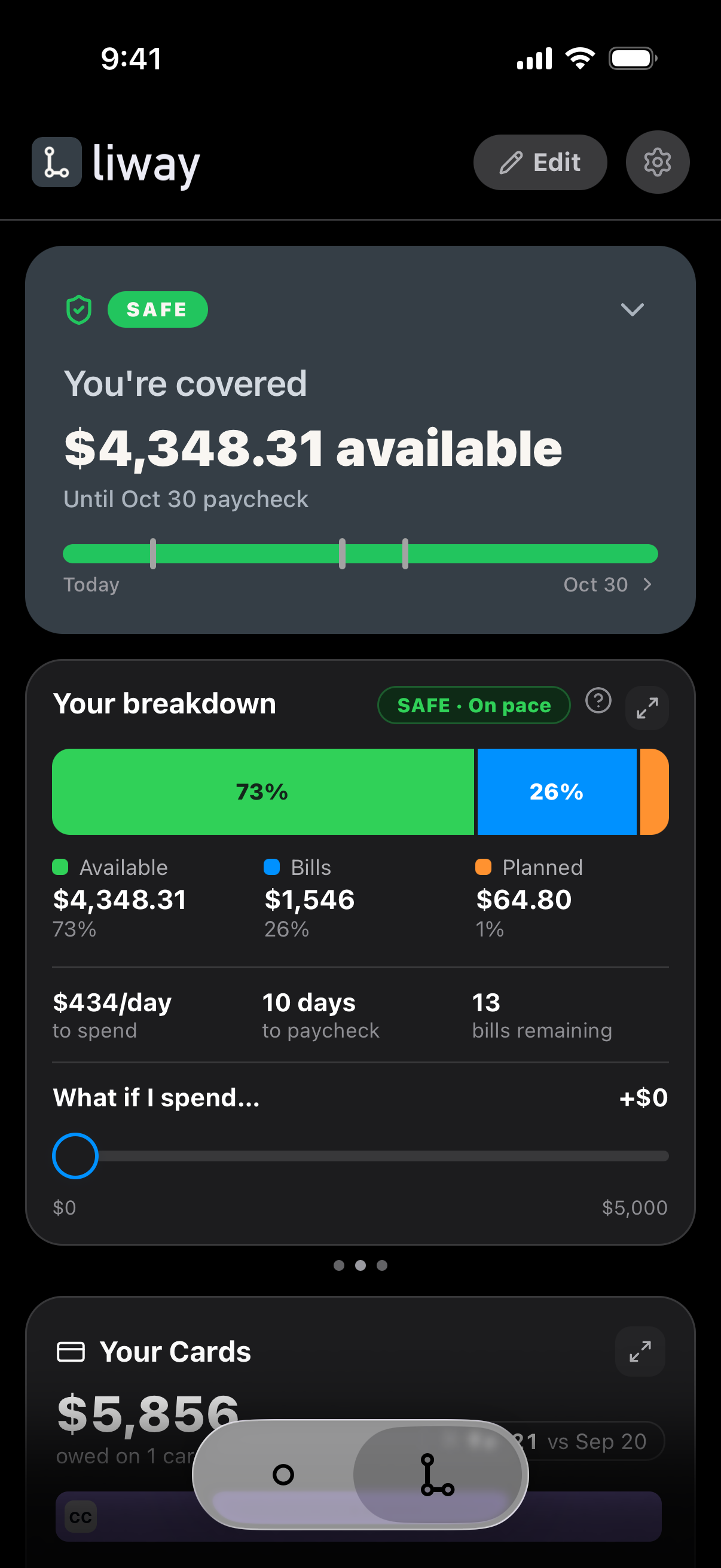
liway shows both numbers side by side, and the reason for the gap: Your breakdown splits Jordan's money into what's available, the bills before payday and what's planned.
Try it with your own numbers.
The Headroom Calculator works it out in a minute, no sign-up. Or let liway do it every day.